Guatemala is a democratic Central
American country bordered by Mexico
on the North and West. It is among the
10 poorest countries in Latin America
and has a high number of children
involved in sex trafficking.
The Facts
• More than half of the population is below the poverty line.
• 17.7% of children under age 5 are underweight.
• 12% of the population lives on less than a
dollar a day.
•Net secondary school enrollment rates are 39% for females compared to 41% of males.
What Buckner is Doing
Buckner began working in Guatemala in 2002. In
January of 2003, we began hosting volunteer
mission trips and became a Guatemalan Foundation
in 2005. Buckner has held, and continues to offer,
ongoing training in the areas of foster care,
preventative health care, child care, residential care
and social services.
Buckner ministries in Guatemala include: two foster group homes and two transitional homes that provide a home-like environment for teens who have been victims of abuse or neglect while they pursue educational and vocational goals; an independent living program for motivated young ladies pursuing college degrees; three Community Transformation Centers, foster care and an assessment center.
Humanitarian Aid
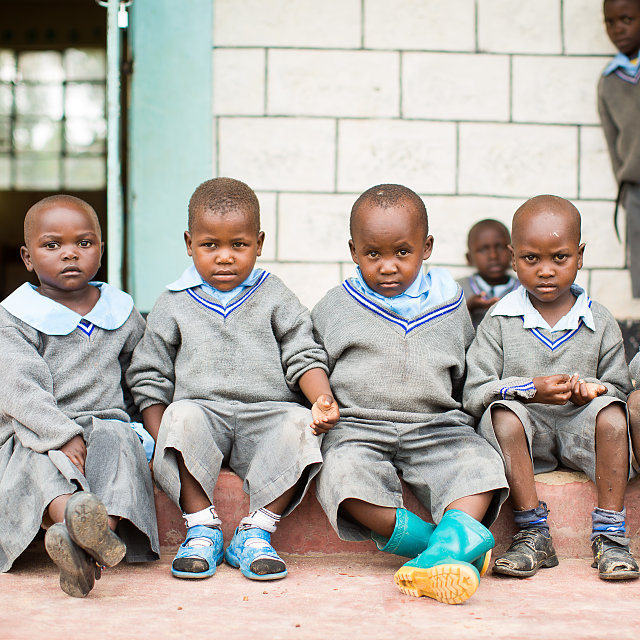
Through humanitarian aid support and distribution
of new shoes, Buckner is helping to prevent future
disease and infection in children. Many diseases
enter the body through the feet when a child walks
through mud and filth without shoes. The gift of a
new pair of shoes not only protects their feet, but
keeps their entire body from being subjected to a
number of diseases. New shoes also help a child go
to school, where wearing shoes is often a
requirement. Buckner has sent 99,029 pairs of shoes to Guatemala to date.
Foster Group Homes/Transitional Homes
Buckner sponsors two homes for boys and two for
girls who are aging out of orphanage care. Residents
are enrolled in an academic, vocational or rehabilitation
program. Services include case management, room
and board, education, job training, tutoring and
mentoring. Assistance with childcare may also be
provided for residents' children.
Buckner began its Transitional Home program in Guatemala in 2005 to help prepare children for independent living. These children are victims of abuse and neglect. A home-like environment is provided while the children pursue educational and vocational goals. The children are given the opportunity to heal and recover from an abusive situation, while learning to provide for themselves.
There are currently two foster group homes in Guatemala: the Marta y Maria home for girls ages 12 to 17 and the Leon de Juda home for boys ages 12 to 17. There are two transitional homes: the Genesis home for girls ages 18 to 21, and the Gedeones home for boys ages 18 to 21. Married couples serve as live-in house parents for about eight children in each home.
The educational and vocational training of the students is diverse. Many of the children come to Buckner with little or no education, and are enrolled in Buckner's home school. The school is certified by the Guatemala Educational Board. The older students attend local colleges and technical schools in the area and gain valuable business experience.
In addition to their regular studies, children have the opportunity to participate in music lessons. On the weekends they enjoy baking, cake decorating, and English classes. The classes are fun activities for the children, but also teach them skills that will help them be self-sufficient in the future.
Home School for Transitional Youth
Buckner Guatemala provides comprehensive
education to youth in our transitional homes that have
fallen behind and cannot attend public schools. The home
school is accredited by the Guatemala Education System
and operated solely by Buckner.
Foster Care/Kinship Care Services
Buckner manages a foster care program in Guatemala that places children who cannot live with their parents in temporary, loving homes. Buckner has been chosen by the government to pilot the official foster care program in Guatemala and we work directly with Guatemala's Child Protective Services to identify and train in-country foster families. Buckner also manages residential homes that allow foster children to live with other children in family-like structures that are designed to care for children in the home of unrelated family.
Community Transformation Centers - Jocotenango, San Jose Pinula, and El Cerrito
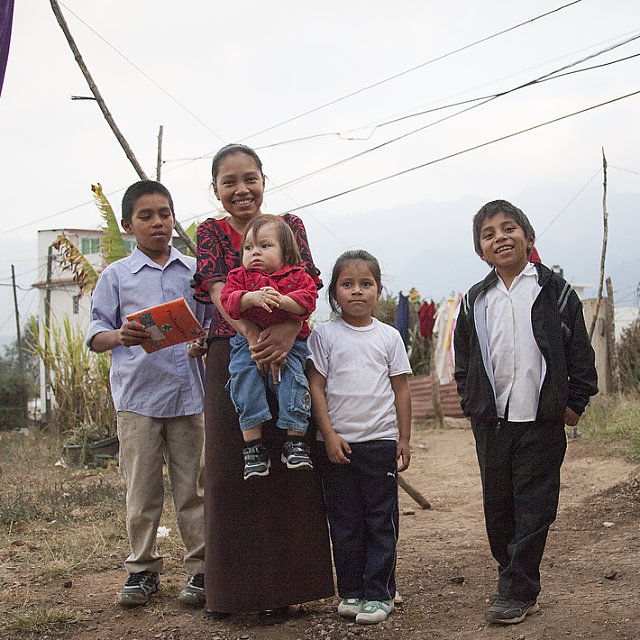
CTC's focus on improving the lives of individuals and families in three communities of extreme poverty with a holistic ministry approach through the following basic services:
• Family Intervention - Moderate to intensive services provided to families
who are experiencing or are at-risk of abuse/neglect, welfare dependency,
delinquent behavior or other problems. Social workers provide case
management to develop an individual family plan to address specific
needs of at-risk families and resolve issues that enable them to move
towards self-sustainability.
• Medical/Dental Services – Includes Health Care Clinics/Centers operated by
Buckner that provide basic health care services, as well as an HIV/AIDS intervention
program including case management, medical services and humanitarian aid
• Family/Life Education – Specialized training offered to children and families
to improve personal and/or family well-being, including parenting, nutritional,
hygiene and literacy classes.
• Evangelical Ministry/Mentoring – Adults connecting with at-risk children,
providing faith-based character development, a positive influence and strong
role modeling through regular contact in group and individual settings.
• Vocational Training – Family-based programming that provides job
skills/technology training, educational support and faith-based character
development training. Child Advocacy Center for Victims of Abuse and Sexual Trafficking
The Buckner Guatemala NGO, in collaboration with International Justice Mission, has developed an advocacy program for the victims of abuse and sexual trafficking. The Child Advocacy Center celebrated its opening on October 28, 2011. The center expected to process 10 cases in 2011 and anticipates 60 in 2012.
Buckner Guatemala NGO will be responsible to be the liaison for the social work component, which entails an integrated continuum of child welfare through intake work, i.e. the initial investigation; counseling; working with the biological families and placement of the child. The CAC is centrally located to make it easy for families to get there. IJM will have a paralegal social worker to take cases to the criminal justice that need to be prosecuted.
Assessment Center
In the last quarter of 2010, an assessment center in collaboration with International Justice Mission was established. The Assessment Center program is designed to care for girls between the ages of 12 and 18 who cannot live at home because they are at-risk for abuse and human trafficking. The girls remain at the center for 3 to 6 months before they are transitioned into foster care, kinship care, or back to their homes through family intervention programs. In addition to providing emergency shelter, the center assesses the girls' cognitive, psychological, and social functioning, and provides crisis intervention services.
Independent Living Program
The Independent Living Program is dedicated to young ladies graduating from the transitional home programs that need alternative housing and minimal supervision. As they attend university, the girls still receive support such as vocational training, career planning and tutoring. These programs are offered to the students with the same self-sufficiency, independence goals as the transitional home programs.
How You Can Help: • Pray: Make a commitment to pray for the children and families of Guatemala.
• Give: Make a donation online to support any of the programs listed above or call 214-758-8050 to make a donation by phone.
• Be an Advocate: Share the needs of children in Guatemala with your church, community, family and friends.
• Collect Shoes: Host a shoe drive or give a pair of shoes to help orphans and vulnerable children in Guatemala. Learn more at www.ShoesForOrphanSouls.org.